
As Featured in and Partnered with










Does this sound familiar?
The most successful people I know are exhausted.
They’re stars in the boardroom, but don’t have the energy to be present for their family.
I’ve spent twenty years working with founders, executives, and family business leaders. The pattern is always the same. Smart people, who are serious about their work, gradually handing their best hours to other people’s agendas and a device that never stops demanding attention.
You might recognise yourself here:
- Your calendar is full and you are not sure you chose most of it.
- You check your phone before you are fully awake.
- Weekends feel like recovery from the week rather than time that belongs to you.
- You have read the productivity books. They help for a week.
- The thing you most want, genuine and intentional time, feels impossible to protect.
If any of that landed, you're in the right place.
The P.O.P. Method
A way of living that predates the problem
The P.O.P. Method draws on twenty years of practice with high-performing families and businesses, Jewish tradition and its radical approach to time, and a clear-eyed understanding of how the attention economy works and what it costs you.

Power
Know what fuels you, then build your days around it.

Omit
Cut what no longer earns its place.

Pause
Build deliberate rest into the architecture of your life.
Where to start
Ways to work with David
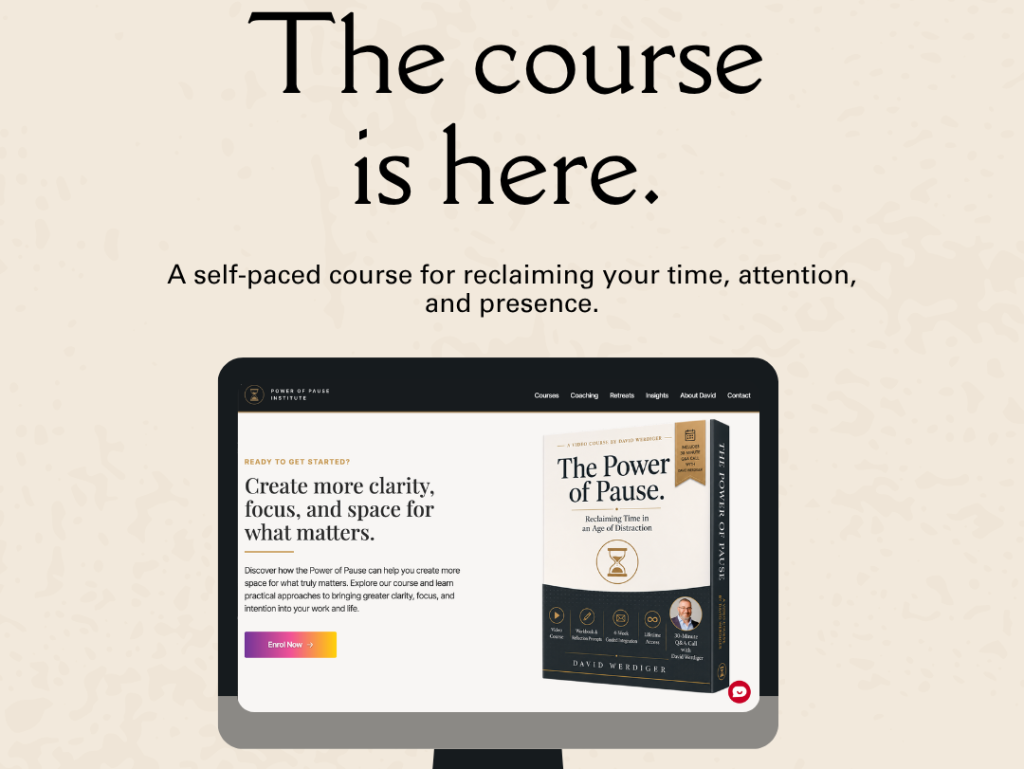
The Power of Pause Course
From US$297
A self-paced video course across three modules. Eleven videos, a companion workbook, and practical exercises. Work through it in three weeks or at whatever pace suits you.
Explore the course
Coaching
By application
Five weeks of private, direct engagement applying the P.O.P. methodology to your actual life and business. Limited places. Available 1:1 or for your group.
Learn about coaching
The Power of Pause Retreat
By application
Experience 24 hours tech free, as part of a weekend of learning
Learn about retreats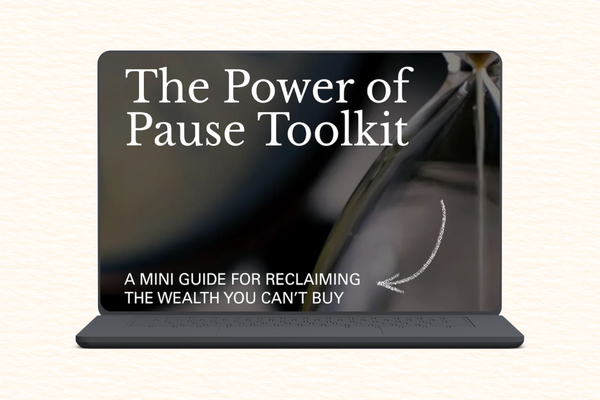
Free Toolkit
No cost
A set of practical resources drawn from the course: the Baseline Self-Assessment, the Stop-Doing List template, and an introduction to the P.O.P. Method. No credit card required.
Download freeTestimonials
Stories of Growth & Clarity

“I’ve read every productivity book out there. This was different. It wasn’t about doing more – it was about reclaiming control over my attention and energy.”
Sarah L., Managing Director

“The framework is simple, practical, and surprisingly powerful. Small changes created a noticeable shift in how I lead, think, and rest.”
Daniel K.,

“The Power of Pause helped me realise that my calendar was full of urgency, but very little intention. For the first time in years, I feel present both at work and at home.”
Michael R., Founder & CEO
“I’ve read every productivity book out there. This was different. It wasn’t about doing more – it was about reclaiming control over my attention and energy.”
Sarah L., Managing Director
“The framework is simple, practical, and surprisingly powerful. Small changes created a noticeable shift in how I lead, think, and rest.”
Daniel K., Family Business Principal
“The Power of Pause helped me realise that my calendar was full of urgency, but very little intention. For the first time in years, I feel present both at work and at home.”
Michael R., Founder & CEO
Who is behind this?
David Werdiger
David Werdiger has spent years advising family business leaders and multigenerational wealth families. What did he learn? The people who have built the most are often the worst at protecting their time.
He has observed the Sabbath in the Orthodox tradition his entire life: one day a week without devices, work, or commerce. In 1995, this was unremarkable. In 2025, it is one of the only reliable mechanisms left for preserving time outside the attention economy.
The Power of Pause is built on that practice.
Read David's full story
Reflections & Insights
Insights into Family, Legacy & Leadership
What’s your strategy for your time?
What’s your strategy for your time? I pondered that question for years. I had habits. I had a Sabbath pract...
Read More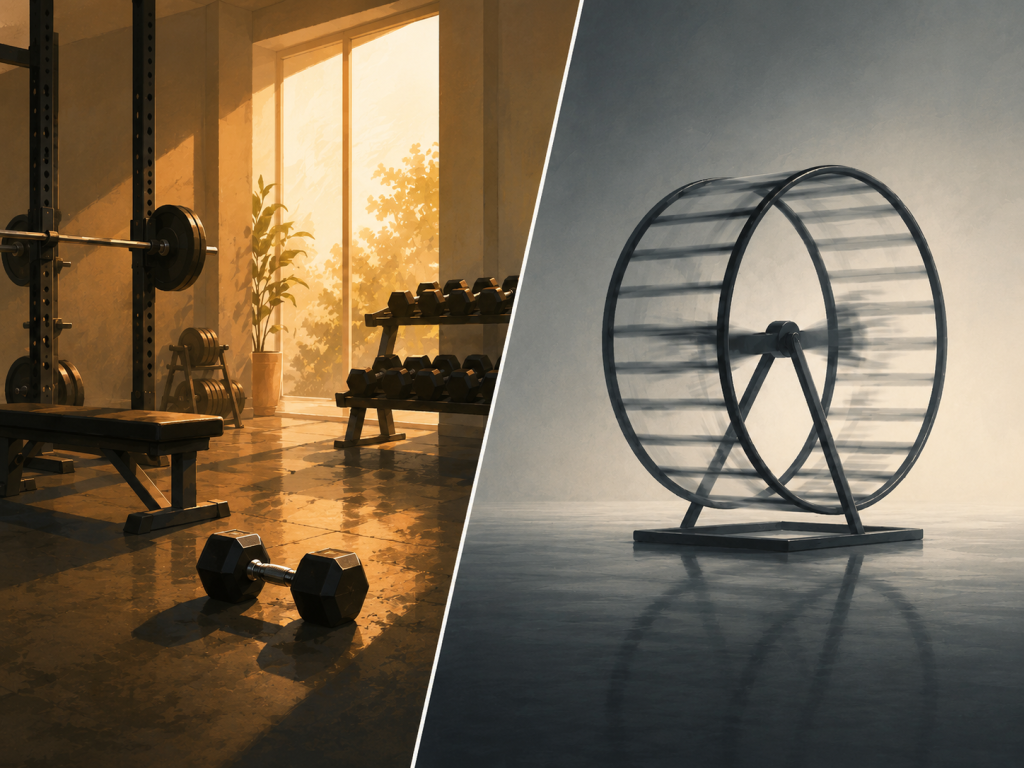
The Hamster Wheel and the Training Regime
Productivity culture runs like a hamster wheel. It just keeps running, at the same pace, going nowhere. Do you...
Read More
Don Draper in Hawaii
There’s a scene in “Mad Men” where Don Draper is asked what he thought about Hawaii, and instead of...
Read MoreJoin the Community